neurothrivecoach.co.uk

Directions Website

neurothrivecoach.co.uk Contact information, map and directions, contact form, opening hours, services, ratings, photos, videos and announcements from neurothrivecoach.co.uk, Alternative & holistic health service, Canterbury.

Qualified teacher & ADHD coach 🧠 Helping adults, parents & children work with their brain, not against it.
✔ Enhanced DBS · Insured · CMA accredited · ICO certified
✔ Access to Work accepted
Canterbury & online UK ·

12/11/2026

🚨 WHAT IF YOUR CHILD'S ANXIETY ALARM GOES OFF EVERY TIME YOU MAKE TOAST?

Imagine having a smoke alarm that's so sensitive it goes off every time you make breakfast. Annoying, right?

Now imagine that's what anxiety can feel like for your child.

Anxiety is your body's alarm system. It's designed to protect you from danger, but sometimes that alarm becomes oversensitive.

For an anxious or neurodivergent child, something that seems relatively small to us can feel HUGE to them.

A change of plans. An unfamiliar situation. A new experience. Something unexpected.

Their alarm goes off, even when there isn't an actual fire.

And telling them to "calm down", "stop worrying" or "there's nothing to be scared of" doesn't magically switch it off.

💛 The goal isn't to rip out the alarm. It's to help your child understand it and learn how to manage it.

Because supporting childhood anxiety isn't about avoiding every situation that feels uncomfortable. It's about understanding your child's needs and helping them build confidence and coping strategies.

The first step? Stop judging the reaction and start getting curious about what's happening underneath.

💾 Save this as a reminder.
➕ Follow for practical ADHD parenting, childhood anxiety and neurodiversity support.


12/11/2026

🚨 STOP ASKING YOUR ANXIOUS CHILD WHY THEY'RE UPSET… ESPECIALLY WHEN THEY DON'T KNOW THEMSELVES!

If your child has ADHD, anxiety or is neurodivergent, you might recognise this…

They're upset, overwhelmed or having a meltdown. You ask what's wrong, why they're behaving like this or what happened.

And you get:
"I DON'T KNOW!"

Cue more frustration. For both of you. 🙈

But here's something worth remembering: children don't always have the words, emotional awareness or ability to explain what's happening inside their heads.

When a child is anxious or overwhelmed, processing questions and explaining their feelings can be really difficult.

So instead of asking:

❌ "Why are you getting so upset?"

Try asking:

💛 "What was happening just before you started feeling like this?"

Help them recognise the feeling before expecting them to explain it.

Are they worried? Frightened? Overwhelmed? Frustrated?

You don't need to solve everything in that moment. Start by getting curious about what's happening underneath the behaviour.

Because sometimes what looks like defiance or difficult behaviour is a child struggling to understand and communicate what they're feeling.

Don't correct what you haven't understood.

Save this question for the next time your child struggles to explain what's wrong, and share it with a parent who might need this reminder.

Follow Neuro Thrive Coach for practical ADHD parenting, childhood anxiety and neurodiversity support.
WHAT IS ADHD & NEURODIVERSITY COACHING? AND COULD IT HELP YOU? 💛It's not about fixing you, making you more organised or ...
10/11/2026

WHAT IS ADHD & NEURODIVERSITY COACHING? AND COULD IT HELP YOU? 💛

It's not about fixing you, making you more organised or teaching you to fit into someone else's idea of how you should function.

It's about understanding how your brain works, recognising your needs and finding practical strategies that work WITH you, not against you.

If you're struggling with time management, organisation, overwhelm, getting started or simply understanding yourself better, coaching could help you find a different way forward.

And I want coaching to be accessible.

🎓 If you're a university student or 💛 receiving Universal Credit, book a discovery call and we can chat about how I can help and the alternative rates available.

There may also be more economical group coaching options.

You don't need to have all the answers. You just need to start the conversation.

09/11/2026

WHY DOES THE TINIEST THING SOMETIMES CAUSE THE BIGGEST MELTDOWN? ❤️
It might not be about that final thing at all.
Think of anxiety like a bucket. Poor sleep, noise, unexpected changes, too many instructions, hunger and feeling rushed can all add to the build-up.
Then one seemingly insignificant thing happens… and the bucket overflows.
The last drop isn't necessarily the reason the bucket overflowed.
Next time your child has a meltdown, try looking at what happened BEFORE it.
Understanding the build-up can help you recognise what your child needs and find ways to support them.
Save this as a reminder to look beyond the behaviour.

05/11/2026

ANXIETY IN CHILDREN DOESN'T ALWAYS LOOK LIKE WORRY. ❤️
Sometimes it looks like anger, refusal, repeated questions, avoidance or needing everything to happen a certain way.
These behaviours don't automatically mean anxiety, but they can be clues worth exploring.
I believe we need to help children recognise their anxiety, understand what they're feeling and build strategies to cope with difficult situations.
But first, we need to understand what's happening underneath the behaviour.
Don't jump straight to "Why are you doing that?" Get curious about what happened before, what you're seeing and how your child might be feeling.
Understanding isn't about removing every challenge. It's about helping children develop the confidence and skills to manage them.
Save this as a reminder to look beyond the behaviour.

Your child knows the rules. So why do they keep breaking them? ❤️If you're parenting a child with ADHD or other neurodiv...
02/11/2026

Your child knows the rules. So why do they keep breaking them? ❤️
If you're parenting a child with ADHD or other neurodivergent differences, you've probably asked yourself this question more than once.
But knowing what to do and being able to do it consistently aren't always the same thing.
Executive function difficulties, impulsivity, emotional overwhelm, sensory sensitivities and transitions can all affect a child's ability to follow instructions.
That doesn't mean there should be no boundaries.
It means we need to understand what's getting in the way so we can help our children develop the skills they need.
💛 Understanding the barrier doesn't mean removing the boundary. It means finding a more effective way forward.
I'm Sam, a late-diagnosed ADHDer and ADHD & Neurodiversity Coach. If you're looking for support with ADHD parenting, emotional regulation or understanding your child's needs, you can book a discovery call with me.
🎓 University student? 💷 Receiving Universal Credit? Get in touch to discuss available discounts.
Online group coaching may also offer a more economical way to access support and learn alongside others who understand.

30/10/2026

"ADHD IS NOT AN EXCUSE." ❤️
You're right. But explaining a difficulty isn't the same as making excuses for it.
ADHD can affect emotional regulation, impulse control, attention and executive functioning. Understanding those difficulties can help parents work out what support, strategies and boundaries might actually help.
Sometimes, when an ADHD parent explains their child's behaviour, they're not trying to justify it. They're hoping you'll understand why their child is struggling instead of assuming they're a bad parent.
Their child might be overwhelmed, struggling to communicate or still learning how to manage big emotions. That doesn't mean there should be no boundaries. It means they may need a different approach to learning and managing those feelings.
Think about it: understanding why something happened helps us work out what to do next.
You can acknowledge ADHD, take responsibility, teach new skills and make changes. Those things can all exist together.
So, before you accuse a parent of making excuses, consider whether they're actually trying to help you understand.
Because when we understand more, we can judge less and respond with more empathy.
❤️ Don't correct what you haven't understood.
Follow for practical ADHD parenting and neurodiversity support.

29/10/2026

ADHD PARENTS: DOES ONE ARGUMENT TURN INTO A FULL-BLOWN FAMILY MELTDOWN? 😂❤️
In our house, escalation was practically an Olympic sport. De-escalation? Not so much!
When you're overwhelmed, your child's shouting can feel like disrespect. Their silence can feel like defiance. And before you know it, you're shouting louder, asking a million questions and trying desperately to make them understand.
But here's the thing: your child might be overwhelmed too.
Some children shout when they're distressed. Others go quiet because they're struggling to process what's being said. Neither response automatically tells you they're deliberately being difficult.
And when your own emotions are running high, it's harder to separate what's happening from what you're afraid it means.
Try pausing before the lecture. Give everyone a chance to calm down, then talk about the behaviour, the boundaries and what needs to change.
Understanding isn't excusing. You can hold your child accountable without turning every difficult moment into a battle.
I wish I'd learned this earlier. Things are so much easier now we're learning to hear each other AND listen. ❤️
You can get it wrong without being a bad parent. Learn from it, repair it and try again.
Save this for the next family meltdown, and follow Sam at Neuro Thrive for practical ADHD parenting and neurodiversity support.

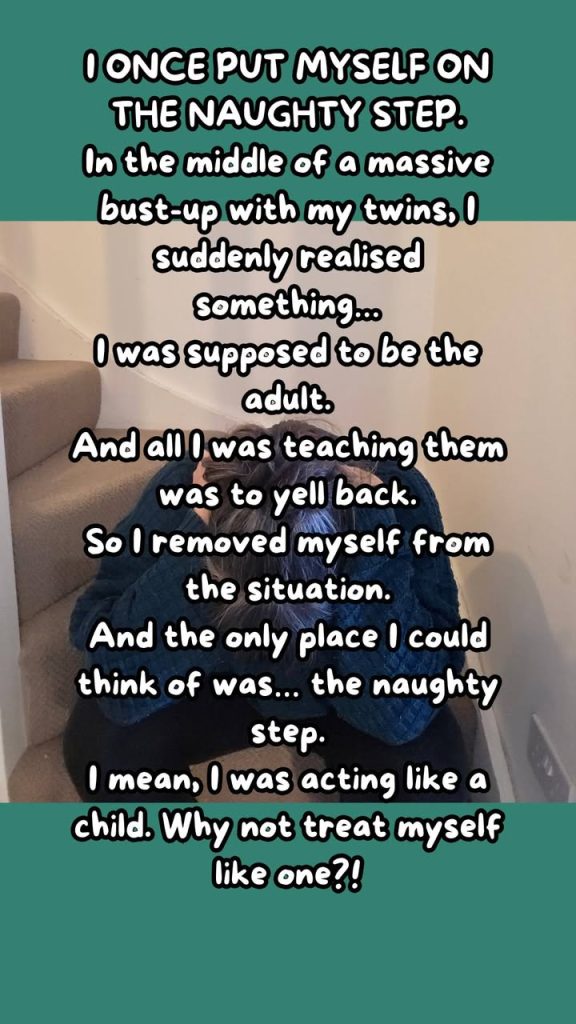
I once put myself on the naughty step in the middle of an argument with my twins. 😂Why? Because I suddenly realised I wa...
28/10/2026

I once put myself on the naughty step in the middle of an argument with my twins. 😂
Why? Because I suddenly realised I was supposed to be the adult, and all I was teaching them was to yell back.
That was when I realised I needed an exit strategy BEFORE I became overwhelmed.
If you have ADHD and experience rejection sensitivity, it's worth thinking about what happens when your child's behaviour triggers those big feelings.
Don't wait until you're in the middle of an argument to work out what to do.
💛 Recognise your warning signs. 💛 Decide how you'll take a safe break. 💛 Explain your plan to your family beforehand. 💛 Agree to return to the conversation when you're calmer.
Taking a break isn't avoiding responsibility. It's giving yourself the chance to respond rather than react.
You can be a good parent and still need time to regulate your emotions.
Save this post and make your plan BEFORE you need it. ❤️

27/10/2026

ADHD PARENTS: ARE YOU TAKING YOUR CHILD'S BEHAVIOUR PERSONALLY? ❤️

When your child rolls their eyes, shouts back or refuses to listen, it can feel like more than just difficult behaviour.

If you have ADHD, emotional regulation difficulties or rejection sensitivity may intensify those feelings. Suddenly, you're not just frustrated. You feel disrespected, rejected or like you're failing as a parent.

But pause for a moment. 💛

Could your child be struggling to express their feelings rather than deliberately trying to hurt yours?

You can acknowledge their feelings, teach them a better way to respond AND maintain your boundaries.

Understanding your child's behaviour doesn't mean excusing it. And feeling hurt doesn't mean you have to react in the heat of the moment.

✨ The feeling is real. But check what it's telling you before you act on it.

Follow for practical ADHD parenting and neurodiversity support, or book a discovery call to explore strategies that work for you and your family.

Address

Canterbury

Alerts

Be the first to know and let us send you an email when neurothrivecoach.co.uk posts news and promotions. Your email address will not be used for any other purpose, and you can unsubscribe at any time.

Shortcuts

Share







