09/11/2026
Your brain has a built-in beat detector. Music therapy puts it to work. 🧠🎶
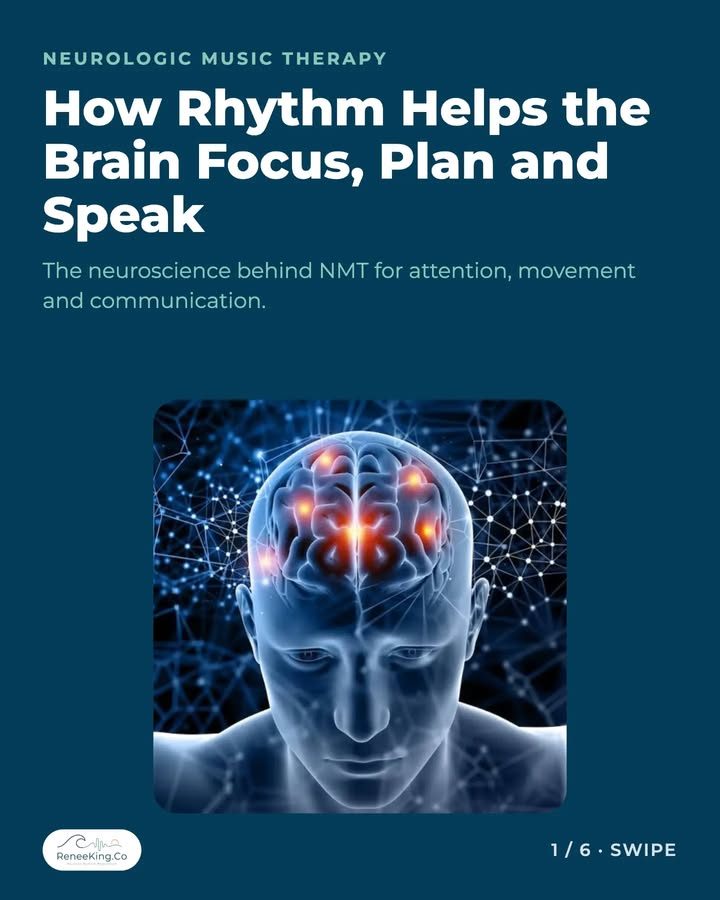
Rhythmically structured sound doesn’t just reach the ears. It engages networks across the brain involved in attention, movement and speech, including the fronto-temporal networks, the basal ganglia and the cerebellum.
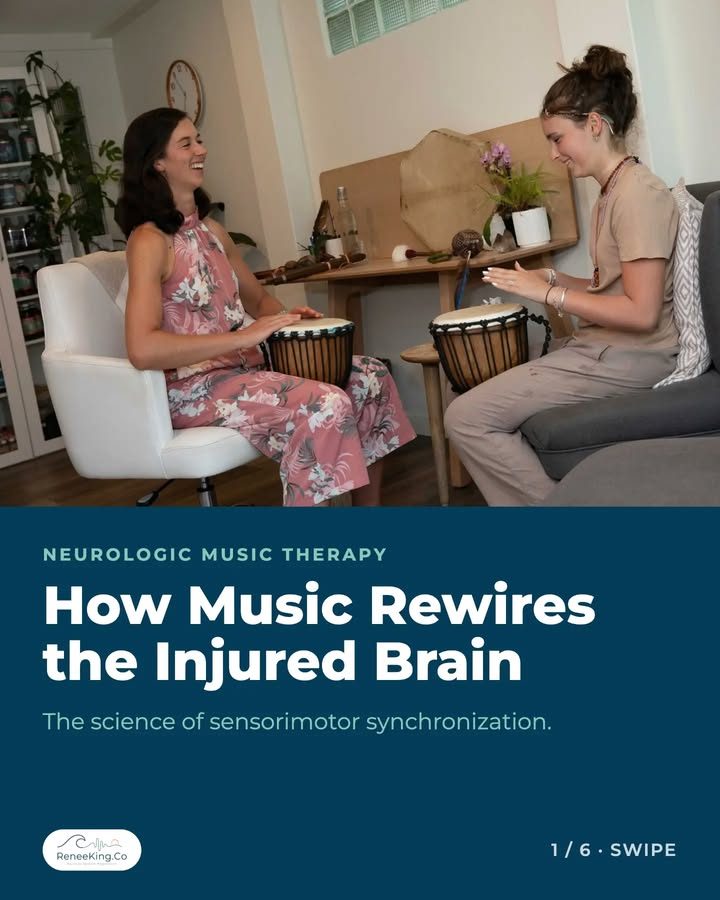
As a Registered Music Therapist (RMT) and trained Neurologic Music Therapist (NMT), I use this in sessions to support people with acquired brain injury, developmental delay, and attention and communication differences.
Swipe through to see:
👉 How rhythm engages whole brain networks
👉 Why music can act as an “auditory scaffold” for attention and impulse control
👉 How a steady beat can work like an external timekeeper to support spoken language
Music therapy isn’t a distraction or a reward. It’s a structured, goal-directed approach grounded in neuroscience.